Who am I?
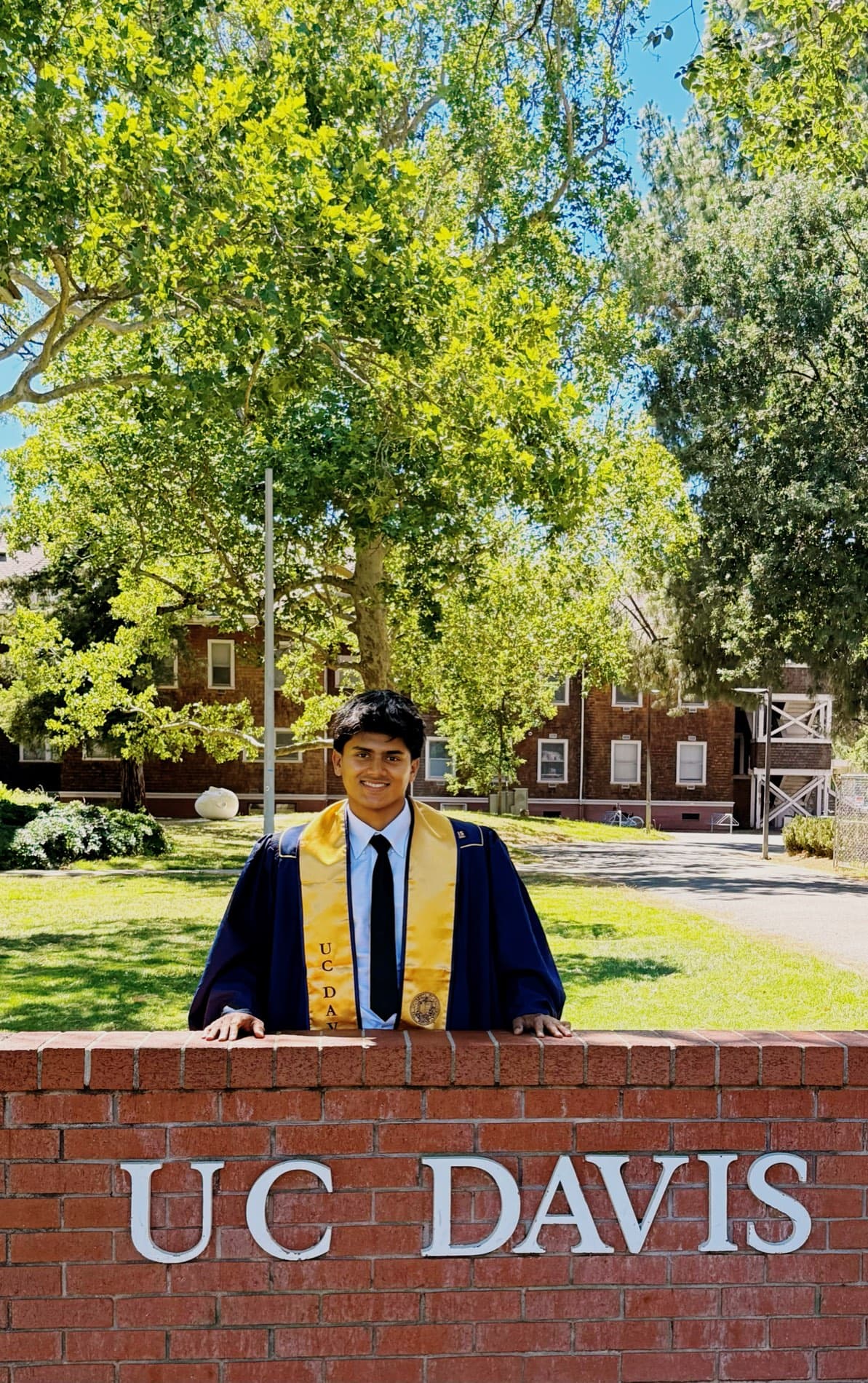
I grew up in Saudi Arabia, where energy was never an abstract concept. It shaped the economy, the landscape, and everyday life around me. That made me curious about the bigger question pretty early: how do you build an energy system that is reliable, affordable, and sustainable at the same time?
I started with Chemical Engineering at NIT Agartala and eventually found myself much more interested in the intersection of engineering, economics, and decision-making. At UC Davis, that has turned into work on EV adoption, vehicle fleets, battery supply chains, energy policy, techno-economics, and project finance. I spend a lot of time building models, testing scenarios, and trying to understand why the numbers move the way they do.
Today, I am less interested in energy as a single technology problem and more interested in the whole system around it. Markets, infrastructure, finance, policy, supply chains — they all matter. I want to work on the problems where those pieces collide and help turn good technical ideas into solutions that can actually scale.
Work experience
Data Research Analyst @ ITS-Davis
Oct 2026 — Present · Davis, California
- Runs the data systems behind the Global South Center for Clean Transportation — vehicle markets, fleet turnover, battery chemistry, cell production and supply chains — stitching fragmented multi-country sources that rarely agree into workflows the research can rerun and trust.
Graduate Researcher @ ITS-Davis
Oct 2024 — Sep 2026 · Davis, California
- Twelve studies since Oct 2024 — six published as reports or policy briefs, three lead-authored — running on stock–flow and dynamic sales models built to carry fleet turnover through to fuel demand and emissions.
- Wrote GSTEM's battery chemistry and supply-chain module: global NCA, NMC and LFP adoption to 2060, and the supplier concentration and mineral dependencies each path locks in.
DAAD WISE Scholar @ TU Braunschweig
May 2023 — July 2023 · Braunschweig, Germany
- A comparative techno-economic study benchmarking proton-exchange-membrane (PEM) and alkaline electrolyzers, each paired with utility-scale solar, in Germany and India.
- Hydrogen at $0.52/kg (PEM) and $0.68/kg (alkaline) by 2050 against $3–4/kg today, on solar falling to about $20/MWh in both countries — fossil-parity territory with no carbon price applied.
Research Intern @ IIT Ropar
May 2022 — July 2022 · Ropar, India
- A techno-economic analysis of hydrogen production from natural gas with and without carbon sequestration, sized to a 20 t/hr steam methane reforming (SMR) plant in India and costed on the US DOE's H2A model.
- Sequestration adds $1.25/kg — $2.05/kg without it against $3.30/kg with, at 40% equity and an 11% after-tax IRR, both within 3% of NITI Aayog's 2022 estimates. Feedstock rather than capital sets the number: a +20% swing in gas consumption alone takes it to $2.32/kg.